
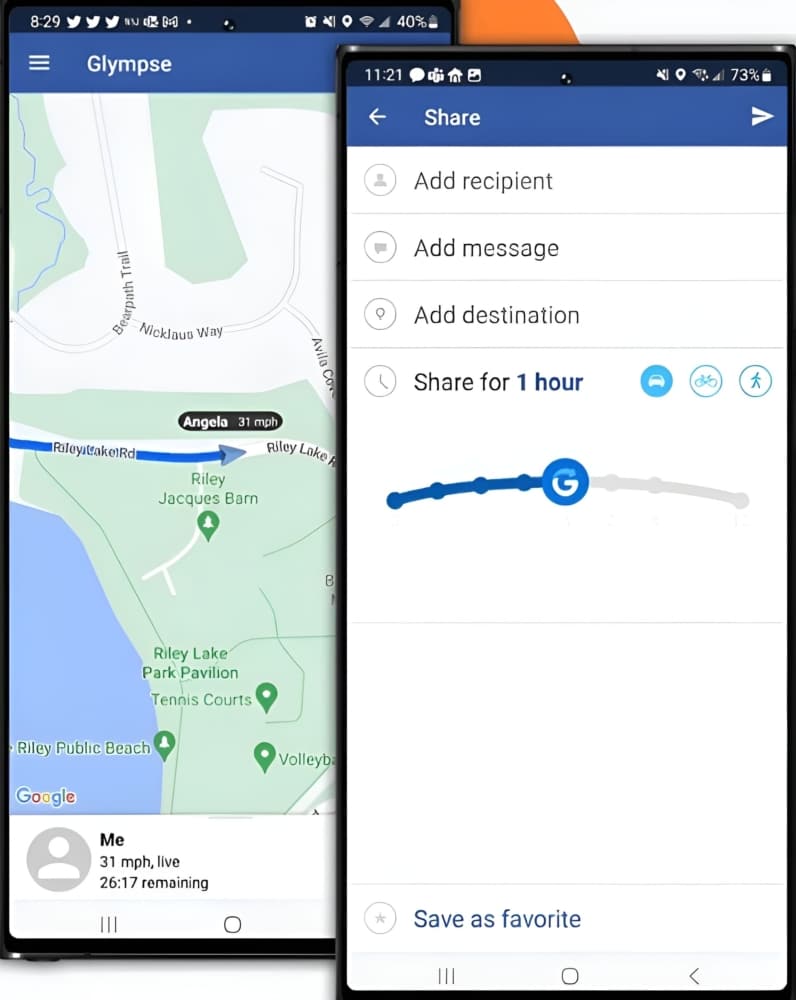
The digital era has turned every pocket‑sized device into a miniature surveillance hub, capable of tracking our footsteps in real time. While most people use built‑in services like Apple’s Find My or Google’s Find My Device to locate a misplaced phone, a growing wave of sophisticated apps and carrier‑backed solutions is giving governments, businesses, and even private investigators unprecedented access to mobile location data.
Beyond the “Find My” App: New Tools for Tracking by Phone Number
In 2026, the market for mobile tracking has expanded far beyond consumer-friendly apps. Companies such as Hoverwatch, SpyX, and mSpy now offer stealth‑mode monitoring that can log GPS coordinates, call logs, SMS history, and even keystrokes—all without the target’s knowledge. These tools typically rely on a phone number or IMEI to identify a device in real time.
While many of these apps are marketed toward personal relationships, they also find use in corporate security and law‑enforcement contexts. For instance, Prey Anti Theft provides remote locking and data wiping for Android devices, while Cerberus can install hidden backdoors on a device once it is physically compromised.
For those who need to locate a phone using its number—perhaps in an emergency or to verify the whereabouts of a missing child—a new service has emerged. By clicking Locate mobile with phone number, users can instantly query a database that correlates SIM numbers with GPS coordinates, provided the carrier permits access. This tool is especially useful for parents monitoring their teenagers or for law‑enforcement agencies pursuing suspects.
Despite its convenience, the service has sparked privacy concerns. Critics argue that linking phone numbers to real‑time location data without explicit user consent skirts the boundaries of the Fourth Amendment. Legal scholars have called for clearer regulations around “location data as personal information.”
How It Works Under the Hood
- Data Collection: Mobile carriers automatically log each cell‑tower connection, creating a granular map of a device’s movements.
- Database Aggregation: Companies like Airtel partner with carriers to store this data in searchable formats.
- Query Interface: Users input a phone number, and the system returns the most recent GPS coordinates along with timestamps.
The speed of these queries can be astonishingly fast—often under a second—thanks to optimized indexing on massive datasets. However, accuracy depends on tower density; rural areas may provide less precise triangulation compared to urban centers with dense infrastructure.
Regulatory Backlash: FCC Fines and Legal Battles
The rapid expansion of location‑sharing services has not gone unnoticed by regulators. In 2026, the Federal Communications Commission (FCC) fined T‑Mobile a staggering $92 million for selling customer location data to third parties without consent as reported by Ars Technica. The court’s decision highlighted that every cell phone is inherently a tracking device, and carriers must obtain explicit permission before monetizing location histories.
Despite the FCC’s ruling, T‑Mobile and other carriers appealed. A three‑judge panel in Washington rejected their attempt to overturn the fine, underscoring the federal government’s commitment to protecting consumer privacy. The case has prompted a wave of legislative proposals aimed at tightening data protection standards for mobile operators.
Meanwhile, state attorneys general have launched investigations into whether carriers are inadvertently enabling “dark‑web” advertisers and data brokers to access location histories without users’ knowledge as detailed by Consumer Reports. The fallout has forced carriers to reevaluate their privacy policies, with some offering opt‑in programs for location data sharing.
Impact on Law Enforcement and National Security
The legal tussles over carrier data have also reverberated in the law‑enforcement arena. Agencies such as ICE and CBP rely on bulk mobile location feeds to track suspects, monitor border crossings, and identify high‑risk areas. However, a 2026 court ruling—stemming from the ACLU’s Carpenter case—mandated that agencies obtain warrants before accessing cell‑tower records directly from carriers Carpenter v. United States.
To circumvent these restrictions, some departments have turned to “AdID”‑based data streams. These identifiers, originally intended for targeted advertising, are now being repurposed as proxies for device tracking. Critics argue that this approach merely masks the true identity of users while still providing a detailed chronicle of their movements.
Consumer Awareness: What You Need to Know
While these tools and legal frameworks can offer peace of mind, they also raise significant privacy questions. Users should be aware of the following:
| Feature | Description | Potential Risk |
|---|---|---|
| Real‑Time GPS Tracking | Instant location updates via satellite or cellular data. | Can reveal sensitive routines and personal habits. |
| Call & SMS Logging | Storage of call metadata and message contents. | Privacy breach if accessed without consent. |
| Geofencing Alerts | Notifications when a device enters or exits predefined zones. | Potential for abuse in workplace monitoring. |
To protect yourself, consider enabling “Lost Mode” on Apple devices or the equivalent on Android. Regularly review your carrier’s privacy policy and opt‑out of location data sharing if possible. Additionally, stay informed about new legislation—such as the proposed Fourth Amendment Is Not For Sale Act—that aims to curb unauthorized bulk tracking.
Practical Steps for Parents and Employers
- Use Family Sharing: Apple’s Find My allows parents to view children’s locations while maintaining transparency.
- Set Up Geofences: Create safe zones for employees or kids and receive alerts if they leave.
- Regular Audits: Periodically check which apps have access to location services on your device.
By balancing convenience with vigilance, users can harness the power of mobile tracking without surrendering their privacy. As technology evolves, so too must our understanding of what it means to be “locatable” in a digital world that never stops moving.